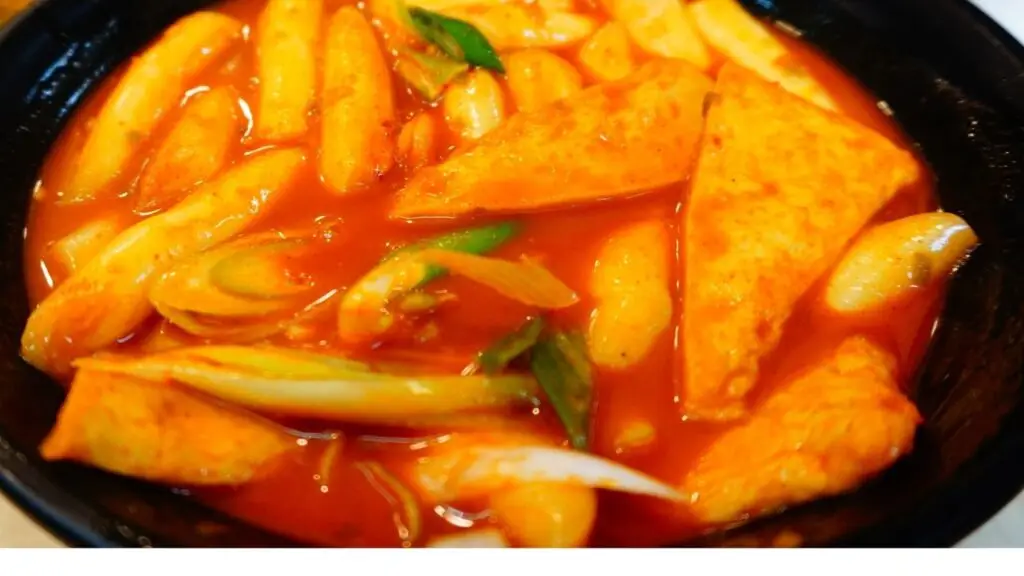
There are two kinds of tteokbokki, and knowing which one you want changes everything about how you cook it.
The first is the soupy kind you get at franchise chains — plenty of broth, rice cakes swimming in it, good for dipping fried things into. Fine. Not what I’m making here.
The second is 시장 떡볶이 (sijang tteokbokki) — market tteokbokki. The kind sold from a wide steel pan at a stall in a traditional market, where the sauce has reduced down until it’s thick and glossy and clings to each rice cake instead of pooling around them. There’s barely any liquid left. The rice cakes look lacquered. That’s the one I grew up eating on the walk home, standing at the counter with a paper cup, and it’s the one worth learning to make.
The good news: it’s a nine-ingredient dish and it takes twenty minutes. The technique that separates it from the soupy version is embarrassingly simple, and I’ll get to it.
Two ingredients to source
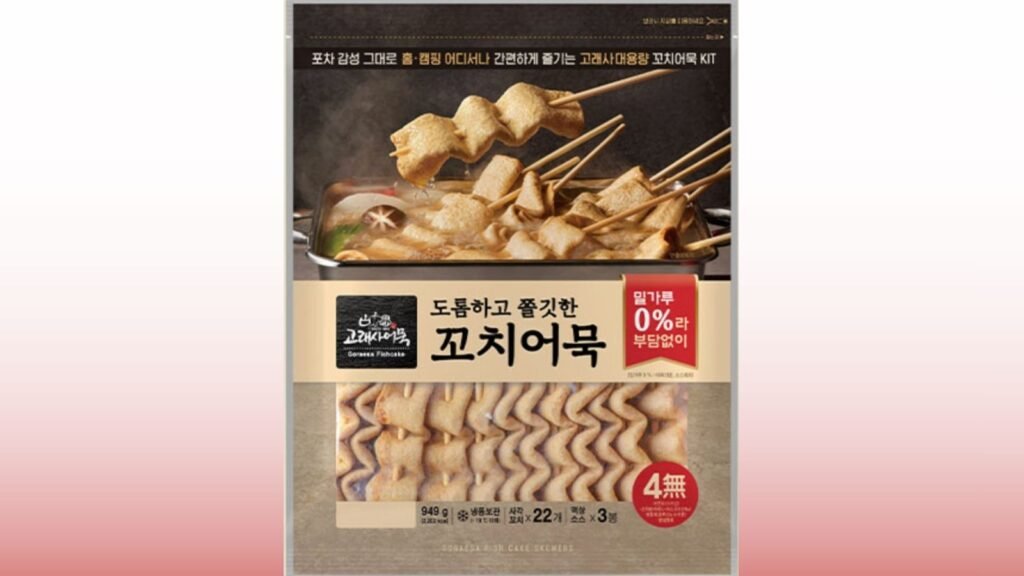
Everything else is pantry stuff. These two you’ll get at H Mart, at a Korean market, or delivered from Amazon! (Tteokbokki Garaetteok Rice Cake).
Tteok — the rice cakes
Look for tteokbokki-tteok (떡볶이떡), the short cylindrical ones, sold refrigerated or frozen in vacuum packs. About 1 pound for this recipe.
You’ll see two types, and this is a real choice:
- 쌀떡 Rice tteok — firmer, springier, cleaner bite. The more common one in the U.S.
- 밀떡 Wheat tteok — softer, chewier, and it soaks up sauce better. This is what most market stalls use, and if you want that specific texture, look for it.
Either works. Rice tteok is easier to find; wheat tteok is the more authentic call for this particular style.
If they’re frozen or hard: soak in warm water for 10 minutes before cooking. If they’re fresh and soft, just rinse and use.
Eomuk — fish cake sheets
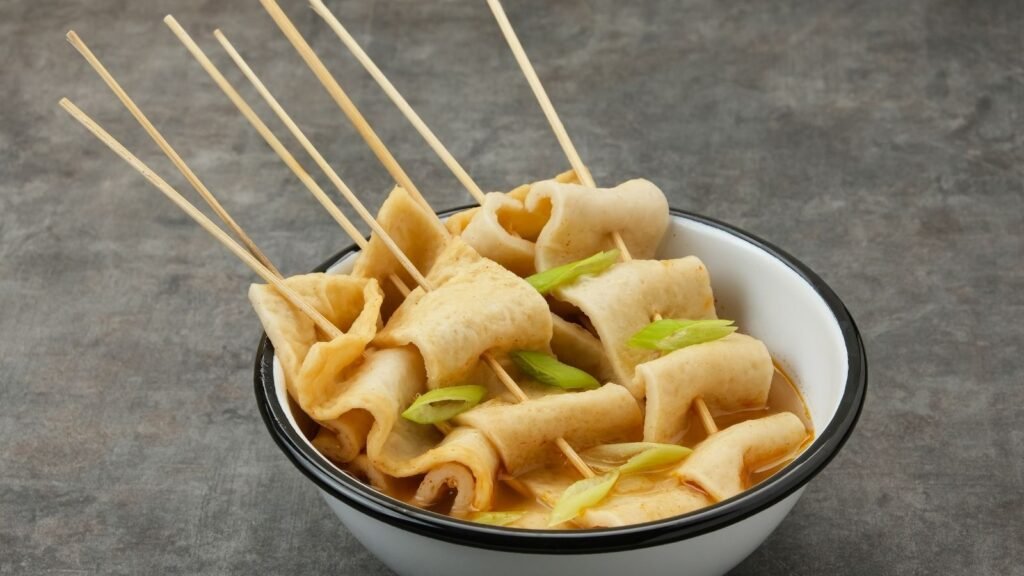
어묵, sometimes labeled odeng. Flat rectangular sheets, sold frozen. You want 3 sheets, cut into strips or triangles.
These are doing real work in this recipe — they’re not a garnish. As they simmer they release a savory, slightly sweet depth into the water that turns plain tap water into an actual broth. Samjin is the standard brand.
No fish cake? The dish still works. It’ll be simpler and a little flatter. Don’t let it stop you.
Ingredients
For the pan:
- 1 lb (500g) tteokbokki rice cakes
- 3 sheets flat fish cake (eomuk), cut into strips
- 2 scallions or 1 large leek-style green onion, cut into 2-inch pieces
- 2½ cups water
- 1 Tbsp sugar
- 1 tsp salt
- ½ Tbsp minced garlic
For the sauce — mix in a bowl first:
- 2 Tbsp gochujang
- 4 Tbsp gochugaru (Korean chili flakes)
- 3 Tbsp sugar
- 1 Tbsp soy sauce
- 1 Tbsp oyster sauce
A word on the heat. Four tablespoons of gochugaru is market-level, and market tteokbokki is not shy. Gochugaru is more fragrant than it is punishing — it’s nothing like cayenne — but if you’re unsure, start with 2 tablespoons. You can stir more in at the end. You cannot take it out.
And a word on the sugar. Four tablespoons total may look like a lot. It isn’t a mistake. Real market tteokbokki is properly sweet, and that sweetness is what makes the heat addictive instead of just hot. Trust it the first time, then adjust.
(Which gochujang and gochugaru to buy? I broke down the brands here.)
How to make it
1. Mix the sauce. Stir the five sauce ingredients together in a small bowl. Set it aside. Doing this now instead of adding things one at a time to the pan is the single biggest thing that makes this recipe feel easy.
2. Build the broth. Lay the scallion pieces flat across the bottom of a wide pan or skillet, then arrange the fish cake on top. Pour in the water, then add the sugar, salt, and garlic.
Putting the scallions on the bottom isn’t fussiness — they sit in direct contact with the heat and give up their flavor faster.
3. Cover and bring to a boil. Four or five minutes. What was plain water is now a savory broth.
4. Add the rice cakes. Cover. Wait 1–2 minutes. Watch them: they’ll swell slightly and turn from dull to white and glossy. That’s them absorbing the seasoned broth, and it’s why they’ll taste seasoned all the way through rather than just coated at the end.
5. Add the sauce — but hold back about a tablespoon. Stir it in until it dissolves. Keeping that last spoonful in reserve is your insurance; you can add it at the end if it needs more, and you can’t undo it if it doesn’t.
6. Now take the lid off and leave it off. This is the whole technique. Turn the heat to low and let it simmer uncovered for at least 4 minutes, stirring now and then.
Two things happen during those four minutes. The liquid reduces and the sauce goes from watery to thick and glossy, coating each rice cake instead of surrounding it. And the low, slow simmer gives the fish cake and scallion flavor time to work its way into the tteok. Rushing this on high heat gets you a sauce that’s thick but tastes shallow.
7. Taste, add the reserved sauce if you want it, and serve immediately. Tteokbokki hardens as it cools — it’s meant to be eaten hot, right now, ideally standing up.
Things to add
Market stalls keep it minimal, which is why it’s good. But if you want to build it out:
- A boiled egg or two, halved, added at the end
- Ramyeon noodles dropped in during the last 3 minutes — this is rabokki, and it’s excellent
- Sliced cabbage for sweetness and bulk
- Mozzarella melted over the top off the heat
- Fried dumplings or tempura on the side, for dipping into what’s left in the pan
Troubleshooting
My sauce stayed watery. You kept the lid on, or the heat was too low for too short a time. Uncovered, low heat, four minutes minimum — give it longer if it needs it.
My rice cakes are hard in the middle. They were frozen and went in without soaking. Ten minutes in warm water next time.
It’s too spicy. Stir in a spoonful of sugar, or a splash of milk or cream. Both work fast.
It got gluey and stuck to the pan. Too high a heat during the reduction. Low and slow.
It’s rock hard now that it’s cooled. Normal. Reheat with a splash of water in a pan and stir — it comes back most of the way.
Frequently asked questions
Can I make this ahead? Not really — the texture is the point and it doesn’t survive sitting. Make it when you want to eat it.
Can I use rice cakes from the freezer without thawing? Soak them in warm water for 10 minutes first. Straight from frozen they’ll be hard in the center.
Is tteokbokki gluten free? The rice cakes usually are, but check — wheat tteok obviously isn’t, and gochujang typically contains wheat. Fish cake often has wheat starch too.
Can I make it vegetarian? Yes. Skip the fish cake and oyster sauce, and build the broth with a piece of dried kelp (dashima) and a few dried shiitake mushrooms instead. Different, still very good.
What’s rabokki? Tteokbokki with instant ramen noodles added. It is exactly as good as it sounds.
Why is mine less red than the pictures? Gochugaru color varies a lot by brand and age. Coarse Korean chili flakes give the brightest red; older or finer ones go duller.
A note on this recipe
This is adapted from a version by Ryu Su-young (류수영), the Korean actor who is, at this point, probably better known at home for his cooking than for his acting. He’s a fixture on Korean food television, and his recipes have a reputation for being reliable and unfussy — which is exactly what you want from a tteokbokki recipe. I’ve adjusted the proportions to my own taste.
One change I make almost every time: I use less oyster sauce than called for, and some days I skip it entirely. It adds a savory backbone, but the fish cake is already doing a lot of that work, and without it the sauce tastes a little cleaner — closer to the tteokbokki I remember from the market. Make it once as written, then try it with half or none and see which one you’d rather eat.
Made a pan of it? I want to see how thick you got the sauce. @season.of.seoul