Walk into the refrigerated aisle at H Mart and see a dozen bags of Korean fish cake.
Prices vary wildly, with some under five dollars and others over fifteen for similar weight.
They look nearly identical through the plastic.
They are not the same product.
The price gap is mostly one variable, and it is printed on the back of every bag.
For the history of the food and why Koreans say eomuk rather than odeng, I wrote that separately: Eomuk, Not Odeng: Korea’s Fish Cake and the City That Made It.
This one is about what to actually put in your cart.
What’s Actually in the Bag
Korean fish cake is a surimi product. White fish is deboned, rinsed repeatedly until the flesh is clean and neutral, ground to a paste, mixed with binders and seasoning, then shaped and cooked — usually deep-fried, sometimes steamed.
Korean fish cake is usually Alaska pollock, threadfin bream, or a blend of the two.
The binder is wheat flour, potato starch, tapioca starch, or a combination.
Seasoning, sugar, oil, and often vegetables round it out.
So the ingredient list is short and the variables are few. Which makes the comparison easy once you know where to look.
The One Number That Matters
Find the fish content percentage. Korean packaging almost always prints it — look for 어육 (fish flesh) followed by a percentage, usually near the ingredient list or in the product description panel.
- 70% and up — premium. Springy, tastes like fish, holds up to long simmering.
- 50–70% — solid everyday range. Fine for tteokbokki and stir-fries.
- Below 50% — you’re buying mostly starch. It’ll bloat in broth and taste like whatever it’s cooked in.
If the percentage isn’t printed anywhere, read the ingredient order instead. Ingredients are listed by weight, so if wheat flour or starch appears at or near the top, that’s most of what you’re holding.
Also check where the flour is. Some premium lines skip wheat flour entirely and use only potato or tapioca starch. That’s a meaningful texture difference, and it matters if anyone at your table avoids wheat — though note that most fish cake also contains wheat-based seasonings, so “no wheat flour” is not the same as gluten-free. Read the allergen line.
Brands Worth Knowing
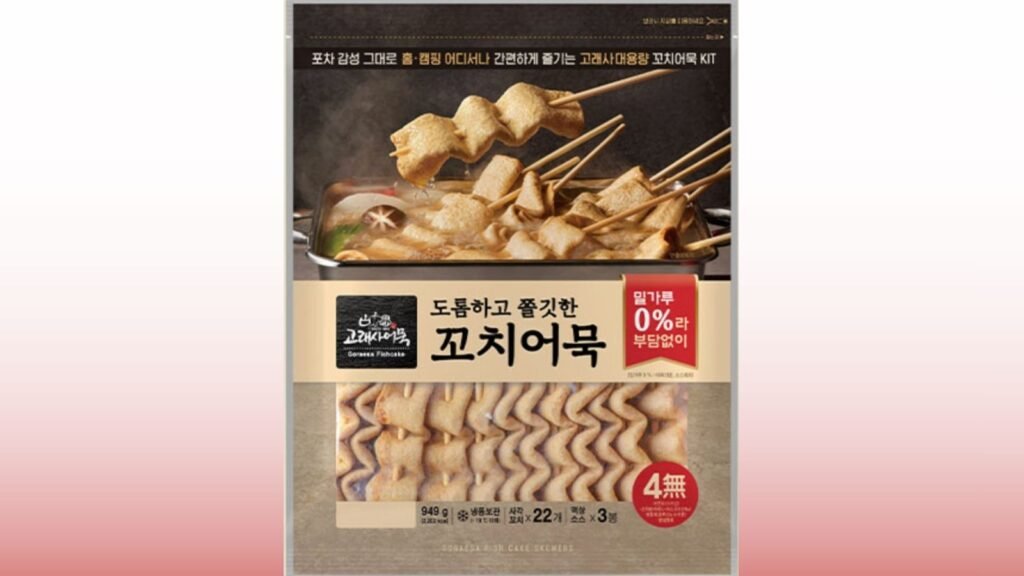
Goraesa (고래사어묵) — Busan, since 1963, now run by the second generation. This is the premium pick and it’s the one currently getting the most attention in Korea. The brand’s position is that fish cake deserves to be a dish in its own right rather than a filler ingredient: high fish paste content, wheat flour kept to a minimum or left out entirely, and some lines made with pollock alone. The texture is noticeably bouncier and the flavor is cleaner than standard supermarket fish cake. It costs more.
Samjin (삼진어묵) — Busan, since 1953, Korea’s oldest fish cake maker. Blends high-grade Alaska pollock with threadfin bream. Also premium, also widely exported, and the one you’re most likely to have seen in a Korean department store food hall.
Everything else — the large national brands (Sajo, Ottogi, CJ, Jongga) make perfectly usable everyday fish cake at a lower price point. For tteokbokki, where the sauce dominates anyway, they’re fine. For a clear broth soup where the fish cake is the dish, spend up.
Formats, and What Each Is For
- Flat sheets (사각어묵) — the workhorse. Cut into triangles for tteokbokki, strips for stir-fry, or fold onto skewers for soup. If you buy one format, buy this.
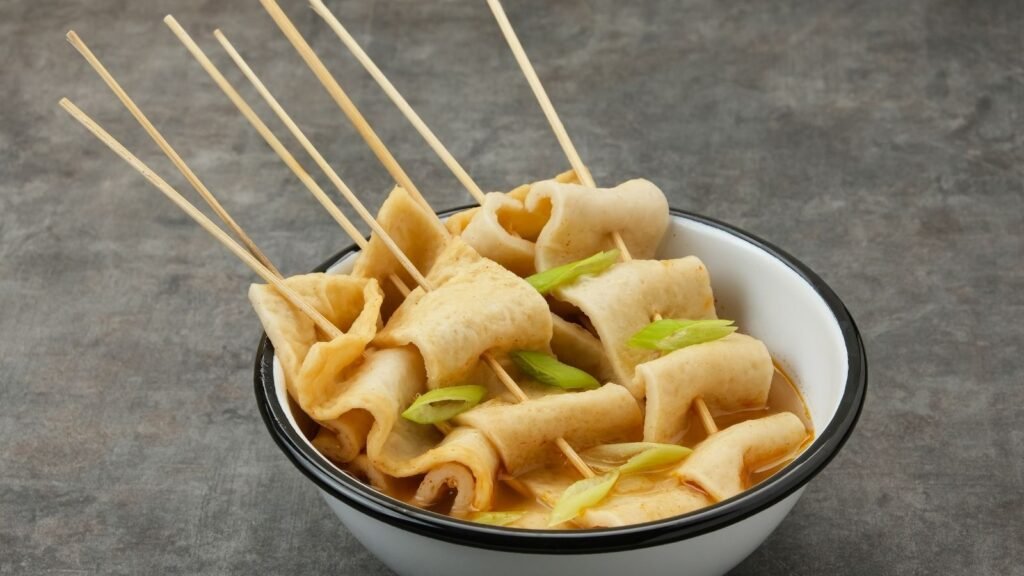
- Skewers (꼬치어묵) — pre-folded onto sticks, ready for eomuk-tang. Convenient, slightly pricier per gram.
- Balls and tubes — for hot pot, stew, and soup. More novelty than necessity.
- Thin strips (실어묵) — mostly for stir-frying as banchan.
- Sliced premium lines — Goraesa makes styles meant to be eaten cold, sliced thin, closer to a charcuterie item than a soup ingredient.
- Soup kits — assorted fish cakes with a broth base and vegetables in one package. Goraesa’s eomuk-tang kit is sold widely in the U.S. and is a reasonable first purchase if you want to taste the difference without assembling anything.
Frozen vs. Refrigerated
Both are fine. Refrigerated has a shorter window and slightly better texture; frozen keeps for months and is what most Korean households actually stock.
If you buy refrigerated, use it within about a week of opening. If you buy frozen, don’t thaw the whole bag — pull out what you need and put the rest straight back. Repeated thawing makes the texture spongy.
The One Prep Step Most People Skip
Fish cake is fried before packaging, and that surface oil goes rancid over time. It’s the main reason older fish cake tastes stale or slightly off.
Pour boiling water over it in a colander before cooking, or blanch it for 15–30 seconds. It takes almost no time, removes the oil film, and noticeably improves the flavor of the finished dish. Every Korean home cook does this. Almost no English-language recipe mentions it.
Where to Buy in the U.S.
- H Mart — the widest selection, in-store and online. Goraesa has a dedicated presence there.
- Zion Market, Hannam Chain, Assi Plaza — good regional options.
- Whee! — reliable frozen shipping, carries Goraesa.
- Wooltari, Mealtones, and similar Korean-specialty online shops — narrower catalogs but often stock the premium lines that general grocers skip.
- 99 Ranch and pan-Asian markets — will have fish cake, usually not Korean brands. Chinese and Japanese fish cake is a different product with a different texture.
Storage
Freeze anything you won’t use within a week. Wrap opened packages tightly — fish cake picks up freezer odors fast. It keeps well for several months frozen, though the texture gradually softens past that.
Don’t refreeze thawed fish cake.
Frequently Asked Questions
What fish content percentage should I look for?
70% or higher is premium. 50–70% is a fine everyday range. Below 50% is mostly starch and will taste like it.
Is Korean fish cake gluten-free?
Usually not. Even lines made without wheat flour often contain wheat in the seasoning. Check the allergen statement rather than the flour claim.
Is Goraesa worth the price?
For soups where the fish cake is the point, yes — the texture and flavor difference is obvious. For tteokbokki, where a heavy chili sauce covers everything, it’s harder to justify.
Do I need to cook fish cake?
It’s already cooked and technically ready to eat. You’re heating it, not cooking it. Blanch it first to remove surface oil.
What’s the difference between Korean, Japanese, and Chinese fish cake?
Korean eomuk is usually fried, flat, and mildly seasoned. Japanese kamaboko is often steamed and denser. Chinese fish balls are springier and more neutral. They aren’t interchangeable in Korean recipes.
Can I freeze it after opening?
Yes, and you should. Wrap it tightly and use it within a few months.
If you’re stocking a Korean pantry from scratch, fish cake belongs in the first ten things you buy. It’s cheap, it keeps indefinitely in the freezer, and it turns a bowl of broth into a meal on a weeknight.