If you only ever buy one Korean ingredient, buy gochujang.
I’ve said this in nearly every recipe post on this site, and I want to explain why with a little more force here: there is no substitute for it. Not sriracha. Not sambal. Not chili garlic sauce and honey stirred together, which I have seen recommended in earnest more than once.
Gochujang is a fermented paste — chili, glutinous rice, soybeans, salt, aged over months. The heat is almost beside the point. What it actually brings is depth: a sweet, savory, slightly funky background note that sits underneath everything else in the dish. Take it out and you don’t get a milder version of Korean food. You get a different, flatter thing.
The problem is that once you decide to buy some, you’re staring at a shelf of red tubs with Korean writing on them and no idea what separates them. So let’s fix that.
The four brands you’ll actually see
Here’s something that surprises people: there is no artisanal gochujang scene in Korea the way there’s a craft hot sauce scene here. The gochujang in nearly every Korean home kitchen — including my mother’s, and she taught this food professionally — comes from one of four large food companies. This isn’t a compromise. These are the standard, and they’re consistently good.
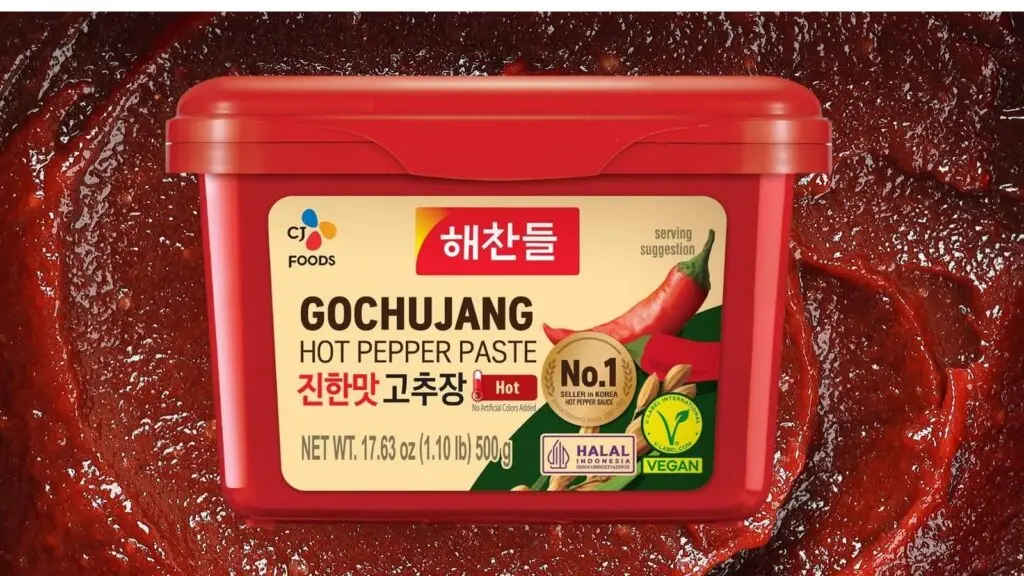
해찬들 Haechandle (by CJ CheilJedang) The best-selling gochujang in Korea, made by the country’s largest food company. Balanced, slightly sweet, mid-level heat, extremely consistent from tub to tub. It’s also the easiest one to find in the U.S.
청정원 순창 Chung Jung One Sunchang (by Daesang) The other giant. “Sunchang” refers to the region in North Jeolla Province that’s famous for gochujang the way Modena is famous for balsamic. Slightly deeper and less sweet than Haechandle to my palate. Their U.S. line is often branded O’Food.
해표 Haepyo (by Sajo) Long-established, solid, a little less common in American stores.
샘표 Sempio Best known for soy sauce, but their gochujang is very good — and they’re the one that has put real effort into the U.S. market, including an organic version that’s genuinely hard to find from the others.
You will not go wrong with any of them. Anyone who tells you a specific one of these four is dramatically superior is telling you about their own childhood, not about the product.
The one thing that actually matters: heat level
This trips up more people than brand choice. Korean gochujang is sold in graded heat levels, and the tub will tell you — usually in Korean, sometimes with a number scale, sometimes with a small chili icon.
| Korean | Meaning | Who it’s for |
|---|---|---|
| 순한맛 (sunhan-mat) | Mild | Kids, or if you’re heat-sensitive |
| 보통맛 (botong-mat) | Medium | Start here. The default. |
| 매운맛 (maeun-mat) | Hot | Once you know you like it |
| 아주매운맛 (aju-maeun-mat) | Extra hot | Committed |
If it’s your first tub, buy medium. You can always add gochugaru to bump the heat up. You can’t take it out.
For what it’s worth: my own preference is Chung Jung One Sunchang in extra hot, which I grew up with and still reach for. It is genuinely hard to find in the U.S. — I haven’t been able to get it on Amazon or Weee!, and the only place I reliably find it is the shelf at H Mart. The medium and hot versions of the same line are much more available online, so if you’re ordering rather than shopping in person, that’s your realistic option.
Paste or sauce? Know which you’re buying
This is the trap I most want to save you from.
Walk down the Amazon results and you’ll see two very different products both labeled gochujang:
- Gochujang paste — comes in a tub or a squat rectangular container. Thick, dense, spoonable. This is what recipes mean. This is what you want.
- Gochujang sauce — comes in a squeeze bottle. Thinner, sweeter, built to compete with sriracha on an American table. Bibigo’s Gotchu is the most visible example.
The sauce is a perfectly nice condiment. Squirt it on eggs, fries, a burger. But it is diluted and pre-seasoned, and if you use it in a recipe that calls for paste, your stew will be thin and oddly sweet.
Rule of thumb: if you can squeeze it, it’s not the one the recipe means.
What I’d tell you to buy
If you’re not sure — just get this one
CJ Haechandle Gochujang, 500g (1.1 lb) This is the answer for most people. It’s the top seller in Korea, it’s the most widely stocked Korean brand in the U.S., and it’s the most forgiving choice in a recipe. It runs somewhere around $9–10 at regular price and drops closer to $6–7 fairly often, so it’s worth checking whether there’s a coupon on the page before you buy.
The 500g tub is the right size to start. It’ll last you months, and it keeps well.
If you want organic
Sempio Organic Gochujang Sempio is the one major Korean brand that has made a real organic version available here. If organic matters to you, this is the practical option rather than a compromise — it’s a good gochujang on its own terms, not just a good organic one.
Sempio Organic Gochujang, Amazon
The Sunchang line
Chung Jung One / O’Food Sunchang Gochujang The Daesang product, from the region most associated with gochujang in Korea. Their U.S. listings are usually the medium heat level, and the brown-rice, no-corn-syrup formulations show up here often. Worth trying once you’ve gone through your first tub and want to compare.
Chung Jung One / O’Food Gochujang, Amazon
Where to buy it
H Mart — the widest selection by far, including heat levels and specialty lines that never make it online. If there’s one within driving distance, go in person at least once. Prices are usually the best, too.
Amazon — the most convenient. All the major brands are there, though the assortment skews toward medium heat and the more export-oriented products. Prices swing a lot, so check the coupon box on the listing.
Weee! — good coverage if you don’t have an Asian market nearby, and worth using while your first-order delivery is free. I wrote a full guide to ordering from them [here].
Your regular grocery store — increasingly, yes. Bibigo products are in a lot of mainstream American supermarkets now, but read the label carefully to make sure you’re getting paste and not sauce.
Storing it
Once opened, keep it in the refrigerator. It’ll last close to a year — this is a fermented product and it’s very stable — but it slowly darkens and gets saltier as moisture evaporates.
Two small things that help: press a piece of plastic wrap directly onto the surface of the paste before you put the lid back on, and always use a clean, dry spoon. Water and stray food are what cause problems, not time.
If the top layer looks darker than the rest, that’s oxidation, not spoilage. Stir it in.
Now use it
A tub of gochujang is a lot of gochujang, and I don’t want it dying in the back of your fridge. The easiest entry points:
- Bibimbap sauce: 2 Tbsp gochujang, 1 Tbsp sesame oil, 1 Tbsp sugar, 1 Tbsp water, 1 tsp vinegar, sesame seeds. Whisk. Done.
- Tteokbokki, the spicy rice cakes.
- Marinade for chicken or pork: gochujang, soy sauce, garlic, honey, sesame oil.
- Stirred into a stew — kimchi jjigae, sundubu, army stew.
- On things that aren’t Korean at all. A spoonful in mayo makes a very good sandwich spread. A spoonful in a vinaigrette is better than it has any right to be.
Frequently asked questions
Is gochujang very spicy? Less than people expect. Medium heat is comparable to a mild-to-moderate hot sauce, and the sweetness and fermentation round it out considerably.
Is gochujang gluten free? Usually not — most contain wheat, and many contain soybean and sometimes egg. Check the label; a few gluten-free versions exist but they’re the exception.
Is it vegan? Most standard gochujang is, but formulations vary and some list egg among allergens. Read the specific tub.
How long does it last after opening? Around a year refrigerated. It’s a preserved food; the risk is drying out, not spoiling.
Can I substitute miso plus chili? It gets you a rough approximation of the savory base but misses the sweetness and the specific chili character. Fine in an emergency. Not the dish.
What’s the difference between gochujang and gochugaru? Gochujang is the fermented paste. Gochugaru is dried Korean chili flakes — a separate ingredient, used for kimchi and for adding clean heat. You’ll eventually want both.
Which tub ended up in your cart? Tell me. @season.of.seoul
1 thought on “Which Gochujang Should You Buy? A Korean’s Honest Guide to the Big Brands”