I want to start with a confession, because I think it’s more useful than pretending.
I watch the videos. Everybody watches the videos — someone lifting the shell off a soy-marinated crab, scooping rice into the cavity, mixing it with the roe, taking a bite with their eyes closed. It’s one of the most-filmed moments in all of Korean food content, and every single time I see it I think: I need to eat that.
And then I don’t.
I’ve lived in the U.S. for years and I can count on one hand the number of times I’ve had 간장게장 (ganjang gejang) here. I tell myself I’ll have it on my next trip to Korea. I have flown home, spent two weeks eating everything, and come back without having eaten it. More than once.
So before I tell you where to go for the best version I know, I want to be honest about the gap between how good this dish looks and how often I actually eat it. I think the gap is interesting, and I think it tells you something real about the dish.
What it actually is
Ganjang gejang is raw blue crab, cured in a seasoned soy sauce brine. Not cooked. Not pickled in vinegar. Raw crab, submerged in soy sauce that’s been simmered with aromatics and sometimes medicinal herbs, and left to cure until the flesh turns soft, translucent, and almost custard-like.
The texture is the thing people aren’t prepared for. It isn’t firm like cooked crab. It’s silky and slightly gelatinous, closer to uni or raw scallop than to a crab cake, and it slides out of the shell rather than flaking. The flavor is deeply savory, briny, faintly sweet, with the soy sauce sitting on top of the crab’s own sweetness rather than covering it.
Koreans call it 밥도둑 (bapdoduk) — “rice thief.” The idea is that the dish is so good it steals your rice; you’ll go through bowl after bowl without noticing. It’s the highest compliment in Korean food vocabulary, and ganjang gejang is the dish that earned the phrase.
There’s also 양념게장 (yangnyeom gejang), the same crab cured in a spicy red seasoning instead of soy. Different dish, same principle. Most good restaurants serve both.
Why I rarely eat it in America
Not because it’s unavailable. You can find it. Here’s the honest breakdown:
Raw seafood requires trust. This is uncooked crab. Quality and handling matter more than in almost any other Korean dish, and I want to be confident about where the crab came from and how long it’s been sitting. In Korea that confidence is easy. Here I’m more hesitant, and hesitation kills appetite.
It’s expensive. Good gejang is a splurge in Korea and more of one here. When I’m choosing where to spend at a Korean restaurant in the U.S., something else usually wins.
The crab is different. The classic version uses 꽃게 (kkotge), Korean blue crab, ideally female and full of roe in spring. The specific sweetness of that crab is a lot of what makes the dish. Substitutes work; they’re not the same.
It’s a commitment. This is not a casual order. It’s messy — you’re using your hands, sucking meat out of legs, taking your time. It’s a dish for a table of people who’ve agreed to be there a while.
So it stays on my list. And I keep not getting to it. If you’ve had the same experience, you’re not alone, and it doesn’t mean the dish isn’t worth it.
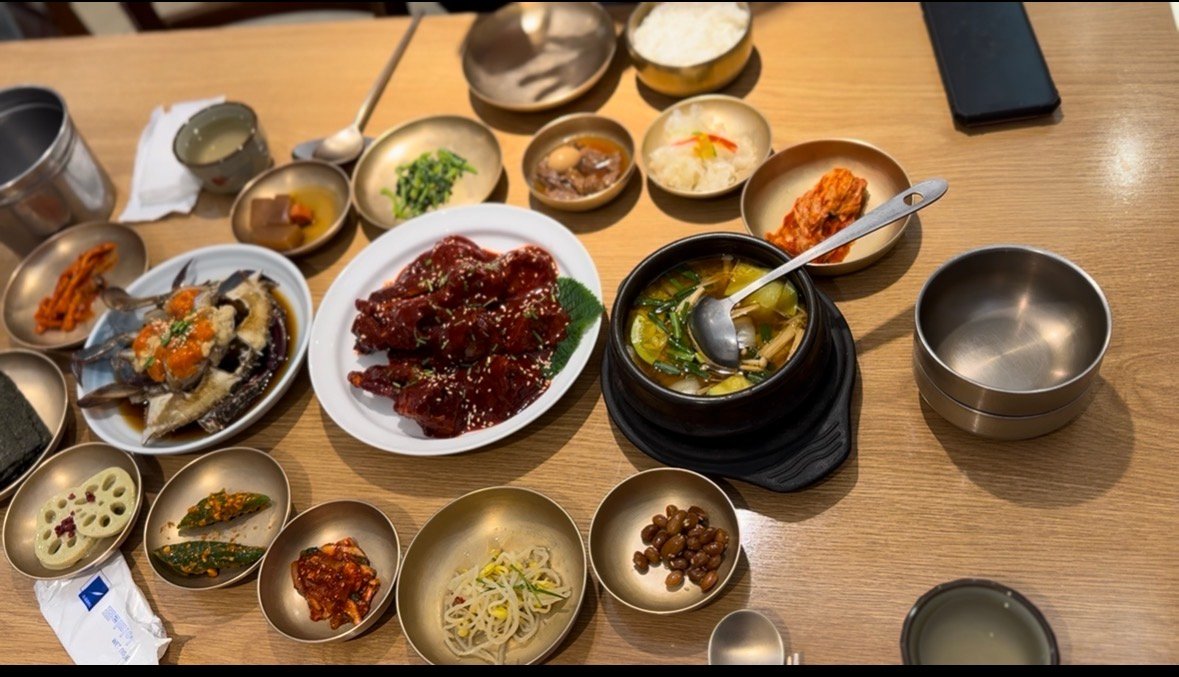
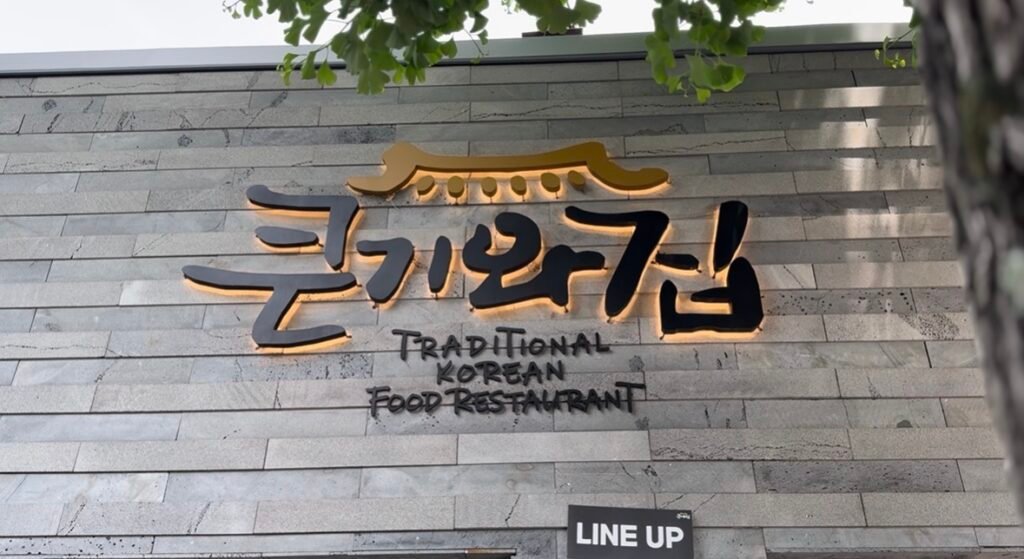
If you’re going to Seoul: 큰기와집 Keunkiwajip
This is the one I’d send you to, and specifically the one I’d send a first-timer or a visitor to.
It’s in Bukchon, in the traditional hanok neighborhood near Anguk Station — which already puts it in the part of Seoul most visitors are walking through anyway. The setting matters here. You’re eating a centuries-old dish in an old-Seoul neighborhood, and that’s not nothing.
What makes it worth the trip:
They make their own soy sauce. The house brine is aged for years, cooked down with medicinal herbs to strip out any harshness or muddiness. That’s the whole game with gejang — the sauce is the dish — and it’s what separates a serious restaurant from one that buys a base.
The salt level is restrained. A lot of gejang is aggressively salty, which is fine if you’re eating it as a rice accompaniment but overwhelms the crab itself. Here it’s dialed back so you actually taste the crab. If you’ve had gejang before and found it too salty, this version may change your mind.
The banchan are genuinely good. You get around a dozen side dishes, and — this is rarer than it should be — there isn’t a weak one in the set. Everything is clearly made with the same attention as the main dish.
Service is fast, and good with foreign guests. Food comes out quickly, and the staff are used to international visitors. If you’re traveling with people who don’t speak Korean and are nervous about raw crab, this is a low-stress place to introduce them to it.
It carried a Michelin star in the Seoul guide, and it remains one of the best-known gejang restaurants in the city.
Practical details:
- Location: Bukchon-ro 22, Jongno-gu, Seoul (near Anguk Station, Exit 2)
- Take the subway. Parking around Bukchon is genuinely scarce and the streets are narrow — this is not a neighborhood where driving pays off. Anguk Station puts you a couple of minutes away.
- Go off-peak. This is my main piece of advice. Lunch and dinner rushes are genuinely crowded — long waits, loud room, lots of tour groups. Mid-afternoon or early evening is a completely different experience.
- Price: the ganjang gejang runs around ₩59,000 and the gejang bibimbap around ₩37,000 (roughly $43 and $27). It’s not that cheap. For what you get, and given that most people eat this once a trip, I think it’s fair.
What to order: the ganjang gejang is the signature and the reason to come. If you want the flavor without the shell-cracking work, the gejang bibimbap is picked crab meat over rice and the easier entry point.
If you’re ordering for a table, the combination I’d point you to is ganjang gejang plus the grilled black cod (메로구이 mero-gui). It’s a smart pairing: the crab is cool, silky, and salty, and the cod arrives hot, rich, and buttery, with flesh that flakes apart. The contrast in temperature and texture keeps the meal from settling into one note, and the cod gives anyone at the table who’s hesitant about raw crab something substantial to eat.
How to eat it
If it’s your first time, this is the sequence:
- Take the body shell off and set it down like a bowl, roe side up.
- Spoon warm rice directly into the shell.
- Mix the rice with the roe and the sauce clinging to the inside.
- Eat it straight out of the shell. This is the moment from every video. It deserves the buildup.
- Then work through the legs with your hands. Bite, suck, don’t be delicate about it. Nobody at the table is watching.
Napkins. Many of them.
Frequently asked questions
Is it safe to eat raw crab? At a reputable restaurant, yes — the crab is frozen and handled to standard, and the salt and soy cure work as preservation. As with any raw seafood, go somewhere serious rather than somewhere cheap. Pregnant people and anyone immunocompromised should skip it.
Does it taste fishy? It shouldn’t. A well-made version has no off smell at all — soy, sweetness, and clean brine. If it smells fishy, that’s a bad sign about the restaurant, not about the dish.
Can I get good ganjang gejang in the U.S.? Some Korean restaurants in LA, New York, and New Jersey do it well, and H Mart sometimes carries frozen versions. It’s findable. Whether it hits the same is a different question.
Is spicy yangnyeom gejang easier for beginners? Sometimes, yes — the seasoning is bolder and more familiar, which can make the raw texture less startling. If the idea of raw crab is the barrier, start there.
When is the season? Spring, roughly March through May, when female blue crab are full of roe. Restaurants serve it year-round, but that’s the peak.
Have you had it? Did it live up to the videos? I’d like to know, especially if you’re braver about it than I am. @season.of.seoul