There’s a thing Koreans say about rainy days: you crave jeon. The theory is that the sound of rain on a window is basically the same sound as batter hitting hot oil, and your brain makes the connection before you do. I don’t know if that’s science. I do know that the first hard rain every fall, half of Seoul is eating pancakes and drinking makgeolli, and nobody planned it.
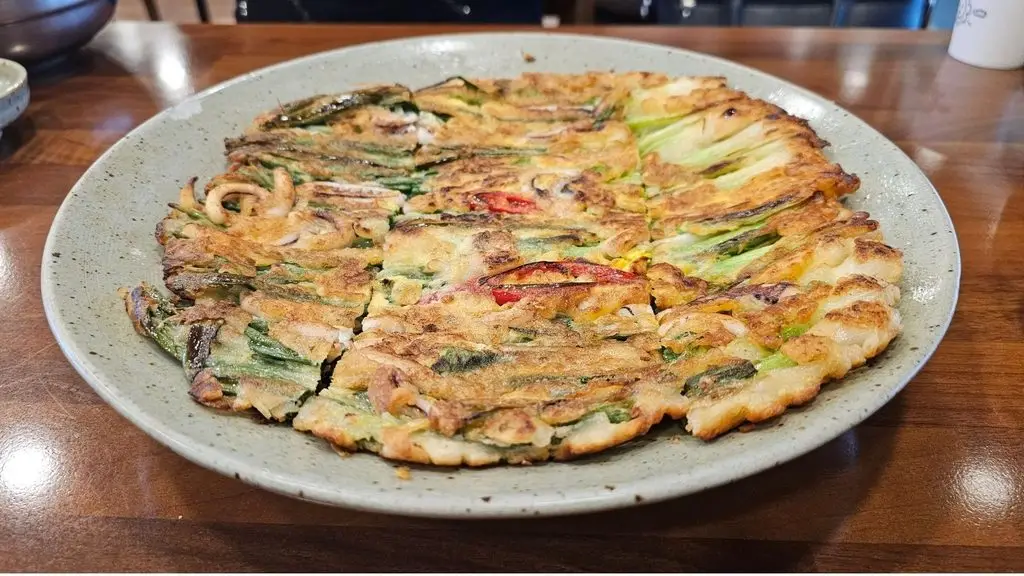
Haemul pajeon (해물파전) is the seafood version — a wide, shaggy pancake packed with more scallion than batter, shrimp and squid tucked into every bite, fried until the edges shatter. It’s the dish that comes out first at a Korean pub, the one everyone tears at with chopsticks while they’re still deciding what else to order.
You can buy a frozen one. Trader Joe’s and H Mart both keep versions in the freezer aisle, and I’ve eaten plenty of them on nights when I wasn’t going to cook. But I want to be honest with you: it is not the same food. A frozen pancake reheated in a pan is soft in the middle and vaguely crisp at the edges. A pancake that comes out of your own skillet and onto the cutting board thirty seconds later is loud. You hear it when you cut it. That’s the whole point of the dish, and it’s the one thing freezing takes away.
The good news is that homemade takes twenty minutes, and Trader Joe’s already sells the hardest ingredient to source.
The Trader Joe’s shortcut
The traditionally correct version of this uses a mix of fresh seafood — shrimp, squid, sometimes oysters or clams — which means a trip to a fish counter and some knife work. You do not have to do that.
Trader Joe’s Frozen Seafood Blend is a bag of shrimp, bay scallops, and calamari rings. That is essentially the exact mix you want for pajeon, already cut to size, for around $8. One bag makes two or three pancakes.
If your store is out, or you want to build your own:
- Trader Joe’s Wild Raw Argentinian Red Shrimp — sweet, firm, and excellent here. Chop them into thirds.
- Any bag of frozen raw shrimp plus a bag of calamari rings. Shrimp alone is completely fine, too. Nobody will file a complaint.
One important prep step: thaw the seafood, then pat it very dry with paper towels. Really dry. Frozen seafood holds a surprising amount of water, and water is the enemy of crispy. If your pancakes have ever come out soggy in the middle, this was probably why. It’s also what takes care of any faint frozen-seafood smell — a quick rinse and a hard pat-down and it’s gone.
Ingredients (makes 2 large pancakes)
For the pancake:
- 8 oz (about half a bag) frozen seafood blend, thawed, drained, patted dry, chopped into bite-size pieces
- 1 large bunch scallions (8–10), cut into 3-inch lengths — you want a lot, this is a scallion pancake first and a seafood pancake second
- 1 cup all-purpose flour
- ¼ cup potato starch — see below
- 1 cup ice-cold water
- 1 large egg
- ½ tsp salt
- ½ tsp garlic powder (optional, but good)
- Neutral oil for frying — at least ¼ cup per pancake. Yes, really.
For the dipping sauce:
- 3 Tbsp soy sauce
- 1 Tbsp rice vinegar or white balsamic vinegar
- 1 tsp sugar
- 1 tsp toasted sesame oil
- 1 tsp toasted sesame seeds
- 1 scallion, thinly sliced
- Pinch of gochugaru (Korean chili flakes), optional
Two things that make the difference
1. Potato starch in the batter
Korean grocery stores sell buchimgaru, a ready-made pancake flour that already has starch and seasoning in it, and if you have it, use it straight. But you can build the same effect with what’s in your pantry: swap about a quarter of the flour for potato starch.
Starch fries up crisper than wheat flour and, more importantly, it stays crisp for longer once the pancake is off the heat. Cornstarch works if that’s what you have. Potato starch is better — it’s cheap, it’s at every Asian market, and it’ll last you a year.
2. Use way more oil than feels reasonable
This is the real secret, and it’s the one most American recipes soften because it sounds unhealthy.
You are not pan-frying this pancake. You are shallow-frying it. The oil should pool in the pan, at least ¼ cup, enough that the batter sizzles hard the moment it lands and the edges start to bubble and fry rather than just set. That’s how you get the lacy, brittle, almost potato-chip edges that make good pajeon good.
Restaurant kitchens use even more than this. If you’ve been making pajeon at home and wondering why it never tastes like the version at the Korean place, this is almost always the reason.
How to make it
1. Make the sauce first. Stir everything together in a small bowl and set it aside. It gets better while it sits.
2. Mix the batter. Whisk the flour, potato starch, salt, and garlic powder together. Add the egg and the ice-cold water, and whisk just until combined — a few lumps are fine. Overmixing develops gluten and gives you a chewy, bready pancake instead of a crisp one. Keep the batter cold until you use it.
The consistency should be thinner than American pancake batter, closer to heavy cream. It should pour, not plop.
3. Heat the oil. Pour ¼ cup of oil into a 10-inch nonstick or cast iron skillet over medium-high heat. Wait until it shimmers. A drop of batter should sizzle immediately.
4. Lay down the scallions. Arrange half the scallions in the hot pan in a flat single layer, all running the same direction. This is the restaurant move — it gives you those clean green stripes instead of a random tangle.
5. Pour the batter over them. Ladle half the batter evenly over the scallions, then scatter half the seafood across the top and press it in gently with the back of a spatula. Press the whole pancake down so it’s thin and even. Thin is crispy. Thick is bread.
6. Fry 3–4 minutes, until the underside is deep golden and the edges look genuinely fried. Resist moving it around.
7. Flip once. Slide the spatula fully underneath and turn it in one motion. Now add another tablespoon or two of oil around the edge of the pan — this is what crisps the second side properly. Press down again and fry another 3 minutes.
8. Cut and eat immediately. Move it to a cutting board, slice it into squares with a knife or kitchen shears, and serve while it’s still crackling. This dish waits for nobody.
Repeat with the rest of the batter for pancake number two.
Let’s talk about that dipping sauce
The standard is soy sauce and rice vinegar, and it’s perfect. But here’s a swap I stumbled into and now prefer:
Use white balsamic vinegar instead of rice vinegar.
It’s slightly sweeter and rounder, with a faint fruitiness that plays beautifully against the salt of the soy and the richness of the fried batter. It’s not remotely traditional and I don’t care — it’s genuinely better, and if you’re American you probably already have a bottle. (Regular dark balsamic is too heavy here. Stick with white.)
Whichever vinegar you use, don’t skip the sauce. Pajeon without it is just a fried thing. With it, the acid cuts the oil and resets your palate for the next bite, which is how you end up eating an entire pancake by yourself standing at the counter.
Troubleshooting
It came out soft, not crispy. Not enough oil, or the seafood wasn’t dry enough, or the pancake was too thick. Usually the oil.
It fell apart when I flipped it. The first side wasn’t set yet. Give it the full 3–4 minutes and don’t test it early.
It’s chewy and bready. You overmixed the batter, or the batter was too thick. Whisk less, and thin it with a splash of cold water next time.
The seafood is rubbery. Squid and shrimp cook in about ninety seconds. In a pancake this thin they’re fine, but if you pre-cooked the seafood before adding it, that’s the culprit — go in with it raw.
Variations worth trying
- Kimchi pajeon: Swap half the seafood for chopped, well-drained aged kimchi. Add a spoonful of the juice to the batter for color.
- Vegetarian: Skip the seafood, double the scallions, and add julienned carrot and thinly sliced onion. That’s pajeon proper, and it’s a classic in its own right.
- Spicy: Slice a jalapeño or a Korean green chili thin and scatter it on with the seafood.
- The full experience: Serve with cold makgeolli, Korean unfiltered rice wine. It’s sold at H Mart and most Korean markets, it’s around 6% alcohol, and it’s the traditional pairing for a reason.
Frequently asked questions
Can I make the batter ahead? Yes, up to a few hours in the fridge — it actually benefits from staying cold. Give it a quick whisk before using.
How do I reheat leftovers? Dry skillet over medium heat, a few minutes per side. Never the microwave; it turns to steamed dough. An air fryer at 375°F for 4 minutes also works well.
Can I use a store-bought pancake mix? Absolutely. Korean buchimgaru is made for exactly this and it’s excellent. Follow the water ratio on the bag.
Is haemul pajeon gluten free? Not as written, but it converts easily — use a 1:1 gluten-free flour blend plus the potato starch, and tamari instead of soy sauce in the dipping sauce.
What size pan should I use? A 10-inch skillet gives you a pancake that’s easy to flip. You can go bigger for a dramatic single large pancake, but flipping a 12-inch pajeon is a genuine athletic event.
Made it? I want to see the edges. Tag me @season.of.seoul.