Open five Korean recipes and you’ll see five different instructions for what looks like the same thing. One calls for cheongju. One says rice wine. One says mirim or mirin. One says cooking wine. One says matsul.
They are not the same thing, and the differences matter most in exactly the dishes where you’d notice — braised fish, marinated beef, anything where you’re trying to get rid of an off smell without flattening the flavor.
Here’s what’s actually in each bottle, and what to buy.
First: Why Korean Recipes Use Alcohol at All
Almost every Korean meat or fish recipe starts with a splash of something alcoholic. It isn’t for flavor in the way wine works in French cooking. It’s doing three specific jobs.
It carries off the smell. The compound responsible for that fishy odor is trimethylamine. It’s volatile and it binds readily to alcohol, so as the alcohol evaporates during cooking, a good part of the smell leaves with it. The same mechanism works on the gamey edge in beef and lamb.
It firms the protein. Alcohol lightly denatures the surface of fish flesh, which helps delicate fish hold together in a braise instead of breaking into shreds. This is why so many Korean fish recipes call for a marinade step before the fish ever touches the pot.
It adds sweetness, gloss, and depth — but only in some bottles. This is where the products diverge, and it’s the whole reason this guide exists.
Cheongju (청주) — Clear Rice Wine
What it is: A clear, refined rice wine, brewed and filtered. It’s a drinking wine, not a cooking product — around 13–16% alcohol, dry, with no added sugar.
What it does in food: Pure odor removal. It strips the fishiness and gaminess and adds a faint rice sweetness, but it will not sweeten your dish or make a sauce glossy.
When to use it: Any time a recipe wants the smell gone without adding sweetness. Marinating fish before a braise. Mixing dumpling filling. Simmering samgyetang. Bulgogi, where you’re already adding sugar or pear and don’t want more.
What to buy: In Korea, Baekhwa Soobok (백화수복) and Chungha (청하) are the standards. In the U.S., look for either of those in the Korean market’s alcohol section, or use a dry Japanese sake — they’re close enough for cooking. Anything drinkable and clear at roughly this strength will work.
Note: Because it’s real alcohol, it may be behind the counter or in a separate liquor area, and some Korean markets in dry-license areas won’t carry it at all.
Mirim (미림) — The One Worth Being Picky About
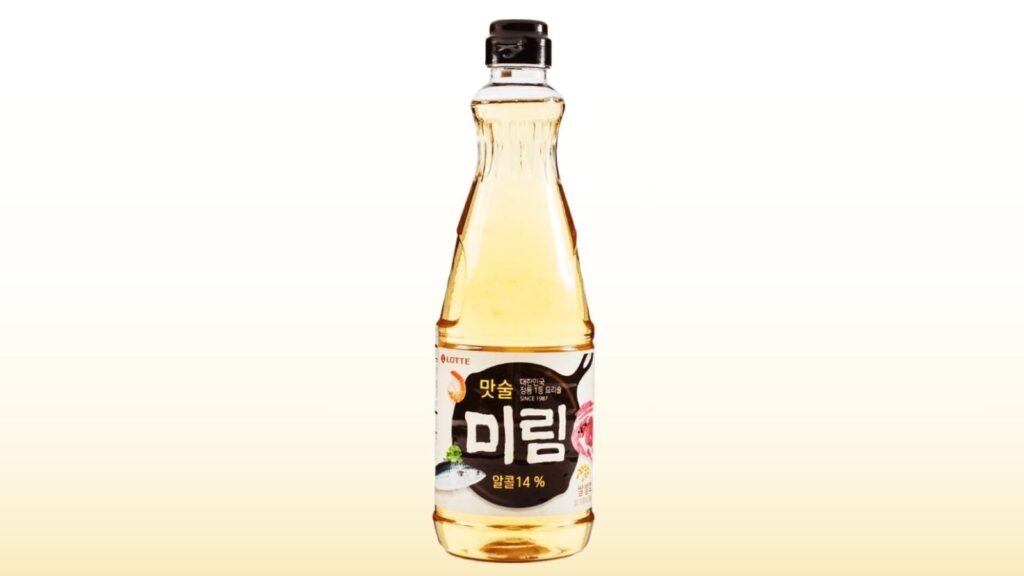
What it is: Here’s the part that trips people up. Mirin (味醂) is the Japanese name for a sweet fermented rice cooking wine. But in a Korean market, only one bottle on the shelf actually says 미림 on the label, and that’s Lotte Mirim, made by Lotte. It’s been the default in Korean kitchens since the late 1980s, to the point where Korean home cooks say “mirim” the way Americans say “Kleenex.”
Why it’s different: Lotte Mirim runs about 14% alcohol. It’s made by combining rice with alcohol, then saccharifying and maturing the mixture for at least 25 days, which develops a range of amino acids and natural sugars.
That maturation is the whole point. The sugars give braises and glazes their shine and contribute to browning. The amino acids add savory depth. And the alcohol — at 14%, not a trace amount — does the actual work of clearing away fishy and gamey smells.
When to use it: Braised fish. Galbi and bulgogi marinades. Teriyaki-style glazes. Jorim of any kind. Anywhere you want the smell handled and a little sweetness and gloss left behind.
What to buy: Lotte Mirim, and specifically Lotte Mirim. This is the single most substitution-resistant item in this guide. Read the next section to understand why.
Matsul (맛술) — “Cooking Wine,” and Usually Something Else Entirely
What it is:Matsul just means “flavor wine” — it’s a generic category name, not a specific product. And most bottles labeled 맛술 in a Korean market are not wine in any meaningful sense.
The catch: Korea taxes alcohol heavily. To avoid the liquor tax and the retail restrictions that come with it, most manufacturers reformulated their cooking wines to sit under 1% alcohol. With the alcohol gone, they added vinegar to do the deodorizing work and syrup or sugar to restore the sweetness.
The Korean industry term for these is mirim-style seasoning (미림풍 조미료), and they’re a genuinely different product. They’re mildly sour where real mirim is round and sweet. And with almost no alcohol, the evaporation mechanism that carries fishy compounds out of the pot simply isn’t available to them.
How to tell which is which: Read the alcohol percentage on the label.
- Real cooking wines (14%+ alcohol): Lotte Mirim (14%), Chungjungwon Yorizu Matsul (15.5%), Bohae Matsul (14%)
- Mirin-style seasonings (under 1%): Ottogi Mihyang (미향), Chungjungwon Matsul, Beksul Matsul, Haepyo Matsul
Look at the ingredient list too. If the first ingredient is water or glucose syrup and there’s vinegar in the list, you’re holding a seasoning, not a cooking wine.
Are they useless? No. If you’re deodorizing something and specifically don’t want added sweetness, a vinegar-based matsul is fine and it’s cheaper. But it isn’t a substitute for mirim in a braise, and swapping one for the other is the reason a lot of home cooks find their galbi or fish jorim tastes thin and slightly sour without knowing why.
The Same Split Exists on the Japanese Shelf
If your market is stocked more Japanese than Korean, the same distinction is waiting for you under different names.
- Hon-mirin (本みりん) — real mirin, around 14% alcohol. The character 本 (“true”) on the label is the marker. Takara is the common brand. Often sold in the liquor section.
- Aji-mirin (味醂風) — mirin-style seasoning, under 1% alcohol. Kikkoman Aji-Mirin is the one most Americans have in the pantry. The first ingredient is usually glucose syrup.
Aji-mirin is what U.S. supermarkets stock, because it isn’t regulated as alcohol. It’s the Japanese equivalent of a Korean 맛술, and it has the same limitation.
Cooking sake follows the same logic: “cooking sake” sold in the grocery aisle usually has salt added specifically so it can’t be sold as a beverage. It works, but it will season your dish, so account for it.
Rice Wine Is Not Rice Vinegar
This one deserves its own heading because it happens constantly.
The bottles sit next to each other, the labels look similar, and “rice wine” and “rice wine vinegar” are three letters apart. They are opposite ingredients. Rice vinegar is acidic and will not deodorize the way alcohol does — it will just make your braise sour.
Check the label before it goes in the pot.
Which One Do I Use?
- Marinating fish before braising or frying → cheongju (clean, no sweetness added)
- Fish jorim, braised dishes, glazes → mirim (sweetness and gloss are part of the dish)
- Galbi, bulgogi, meat marinades → mirim, or cheongju if the marinade already has pear, sugar, or corn syrup
- Soups and clear broths → cheongju, in small amounts
- Dumpling filling, meatballs, jeon batter → cheongju
- Deodorizing without any sweetness, on a budget → vinegar-based matsul
If you only want to buy one bottle: buy Lotte Mirim. It covers the most ground. If you’re buying two, add cheongju.
Substitutions
No mirim? Dry sake or cheongju plus about ½ tsp sugar per tablespoon gets you close. Not identical — real mirim coats ingredients in a way plain sugar doesn’t, which is why Japanese recipes often use both mirin and sugar rather than doubling one — but it works.
No alcohol at all? White grape juice or apple juice diluted with an equal part of water. You’ll lose the deodorizing effect, so compensate with more ginger, garlic, or a longer rinse on the fish.
Never substitute rice vinegar. See above.
Where to Buy and How to Store
Lotte Mirim is easy to find in the U.S. — H Mart, Zion Market, Hannam Chain, and most Korean groceries carry it, and it’s available through Amazon, Walmart, and Weee!. It comes in 500 ml and 900 ml bottles; the 900 ml is better value if you cook Korean food regularly.
Two things to check on a U.S. bottle:
- Confirm the alcohol percentage. Some export formulations differ from the domestic Korean product.
- Check for salt. U.S.-market cooking wines often have salt added so they can be sold outside the liquor section. If yours lists salt, ease up on the soy sauce until you know how it behaves.
Storage is simple: a cool, dark cupboard. No refrigeration needed, and it keeps for years. If sediment settles, shake the bottle.
Frequently Asked Questions
Is mirim the same as mirin?
Essentially, yes — mirim is the Korean pronunciation of the same word. The practical difference is that Lotte Mirim is a Korean-made product with its own flavor profile, and most Korean recipes are written with that specific bottle in mind.
Can I drink Lotte Mirim?
It’s alcoholic, but it’s formulated for cooking and it’s intensely sweet. Don’t.
Does the alcohol cook off?
Most of it, in an open pot over sustained heat. A quick 10-minute braise will leave traces. If you’re cooking for someone who avoids alcohol entirely, use the juice substitution instead.
Why does my Korean cooking taste slightly sour?
Check your bottle. If it’s a sub-1% matsul, that’s vinegar you’re tasting. It’s the most common cause.
Can I use Shaoxing wine instead?
For meat, in a pinch. Shaoxing has a distinct fermented aroma that reads as Chinese rather than Korean, so it will shift the flavor of the dish. It’s a poor match for delicate white fish.
Do I need cheongju if I already have mirim?
Not to start. Mirim covers most home cooking. Add cheongju when you start making dishes where you don’t want the added sweetness — clear soups, dumpling filling, samgyetang.
If you want to see both of these in action in one dish, the fish marinade and braising sauce in my galchi jorim recipe use cheongju and mirim for exactly the reasons above — one to clean up the fish, the other to build the sauce.